








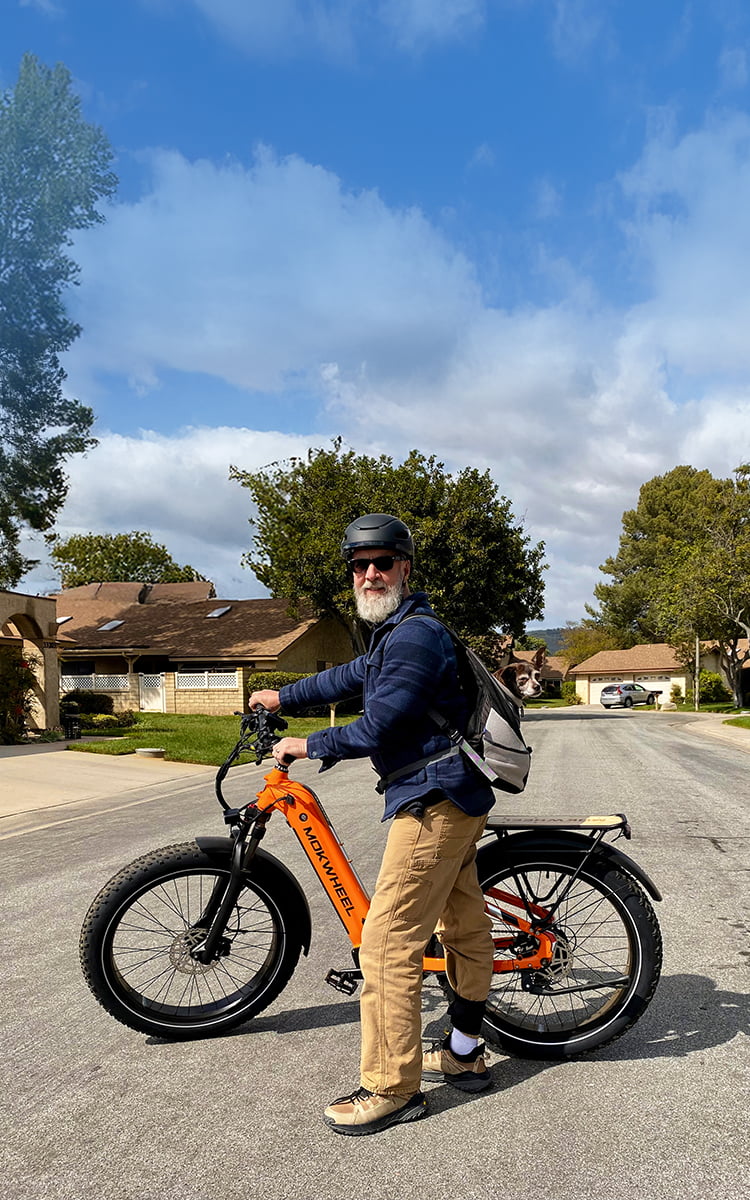


Basalt 2.0 Ebike


FLINT Ebike


Obsidian 2.0 Ebike


Onyx Ebike


FLINT PRO Ebike


Tor Plus Ebike


Asphalt Ebike


Obsidian Ebike


Basalt Ebike


Tarmac Ebike


Basalt 2.0 Ebike


FLINT Ebike


Obsidian 2.0 Ebike


Onyx Ebike


FLINT PRO Ebike


Tor Plus Ebike


Asphalt Ebike


Obsidian Ebike


Basalt Ebike


Tarmac Ebike


0% APR For 12 Months

Reliable Shipping

Quality Assurance

Secure Payment
Customer Favorites


Find a Step-Over Electric Bike That Fits Your Ride
A step-over electric bike, also called a high-step ebike, has a higher top tube between the saddle and handlebars. It suits riders who prefer a traditional bicycle frame and can comfortably get on, get off, and stand over it. Fit and mobility matter more than gender.
Start with the route you ride most often. A paved commute, a gravel detour, and a regularly uneven trail call for different tires, suspension, and drivetrains—even when the bikes share the same frame style.
Which Mokwheel Step-Over Ebike Fits Your Route?
Use the table to build your shortlist, then check the individual product page for fit, current specifications, and availability.
| Model | Start here for | Key differences | Consider another option when |
|---|---|---|---|
| Basalt 2.0 | Pavement, gravel, and everyday mixed surfaces | 26 x 4-inch tires; front suspension; torque-plus-cadence sensing | Choose Obsidian 2.0 if rear suspension is a priority. |
| Tarmac | City commuting with mixed-surface detours | 29 x 2.35-inch tires; front suspension; Standard and Large frames | Choose FLINT if you prefer a geared city bike with a rigid fork. |
| Asphalt | Everyday streets and paved bike paths | 27.5 x 2.4-inch tires; front suspension; torque-plus-cadence sensing | Compare Tarmac for a different wheel size and frame fit. |
| FLINT | Lightweight urban riding with selectable gears | 700 x 45C tires; rigid fork; 8-speed chain drivetrain | Choose FLINT PRO if a single-speed belt better suits your route. |
| FLINT PRO | Paved routes with less routine drivetrain care | 700 x 45C tires; rigid fork; single-speed Gates carbon belt | Choose FLINT when you want multiple gears for changing gradients. |
| Tor Plus | Mixed surfaces with cadence-based assistance | 26 x 4-inch tires; front suspension; cadence sensing | Choose Basalt 2.0 if pedal-force sensing is important to you. |
| Obsidian 2.0 | Regularly uneven routes with full suspension | 26 x 4-inch tires; hub drive; 10-speed drivetrain | Choose Onyx if you specifically want a mid-drive system. |
| Onyx | Full-suspension riding with a mid-drive motor | 26 x 4-inch tires; 10-speed drivetrain; four-piston hydraulic brakes | Choose Obsidian 2.0 if you prefer a hub-drive setup. |
| Obsidian | An earlier-generation full-suspension option | 26 x 4-inch tires; hub drive; 8-speed drivetrain | Compare Obsidian 2.0 for its 10-speed drivetrain and detachable HD display. |
Check Fit Before You Choose a High-Step Frame
Look Beyond the Recommended Rider Height
Rider height is a starting point, not a complete fit check. Compare your inseam with the model’s published standover measurement, then check reach and saddle adjustment. Wheel size alone does not tell you whether you can comfortably clear the top tube.
For example, the Tarmac size chart lists a 31-inch standover height and 16-inch reach for Standard, compared with 32 inches and 17 inches for Large. The larger size changes both top-tube clearance and how far you reach—not just saddle height. Check the chart for your chosen model rather than applying these measurements to every step-over ebike.
Check Mounting and Control Before You Buy
With the bike supported and assistance switched off, ask a dealer to help you check the following:
- Stand over the frame with both feet flat on level ground. Confirm that you have comfortable clearance above the top tube.
- Practice getting on and off. Consider how your planned rear rack, bags, or other approved accessories could affect the movement.
- Check your riding position and access to the brake levers. You should not need to overreach or strain to control the bike.
If the higher top tube makes mounting awkward, a step-through electric bike is the more practical starting point. That can matter with frequent stops, restrictive clothing, limited mobility, or rear cargo.
Match Tires, Suspension, and Assistance to Your Ride
Mostly Paved Streets and Bike Paths
For daily road use, start with Asphalt or Tarmac if you want front suspension. Both sit within our city and commuter electric bikes, with different wheel sizes and frame geometry to compare.
FLINT and FLINT PRO use rigid forks and 700 x 45C tires. Explore our lightweight electric bikes if carrying and everyday handling are priorities, but check complete bike weight and how you will lift the bike before deciding.
Mixed Surfaces and Repeated Bumps
Basalt 2.0 and Tor Plus combine front suspension with 26 x 4-inch tires. They are useful starting points among our fat-tire electric bikes when your usual route mixes pavement with gravel or other uneven surfaces.
Wider tires can add cushioning, but tread, pressure, rider load, and surface conditions also affect how a bike rides. Use the fat-tire versus regular-tire guide to understand the tradeoffs before choosing by tire width alone.
For regularly rough routes, Obsidian 2.0, Obsidian, and Onyx are full-suspension electric bikes. Their front and rear suspension help absorb repeated bumps, with additional components to inspect and service.
Explore our off-road electric bikes for more route-focused options, and check each model’s intended use before taking it onto a trail.
Torque Sensing or Cadence-Based Assistance
A torque sensor responds to pedal force; a cadence sensor detects crank rotation. Tor Plus uses cadence-based assistance, while Basalt 2.0 combines torque and cadence sensing. These are different assistance approaches, not different frame types.
If you are unsure which you prefer, read the torque sensor versus cadence sensor guide, then ask to try the assistance on your shortlisted model. Actual response also depends on the bike’s controller and settings.
Hub Drive or Mid-Drive
Onyx uses a mid-drive motor, which sends assistance through the bike’s drivetrain. Obsidian 2.0 uses a hub motor that drives the wheel directly. The hub-drive versus mid-drive guide explains the mechanical difference.
If repeated climbs make gear choice a priority, consider our mid-drive ebikes. A mid-drive can use the bike’s gearing, but also sends motor load through the chain and gears. Choose with your route and maintenance expectations in mind, not on motor location alone.
Multiple Gears or a Single-Speed Belt
Choose FLINT when you want multiple gears to adjust your pedaling effort and cadence as the gradient changes. Choose FLINT PRO when a single-speed drivetrain suits your regular paved route and you prefer a belt that does not need chain lubrication.
Our belt-drive electric bikes still need routine care. A belt is not maintenance-free: cleaning, condition checks, and correct tension and alignment remain important.
Plan for Storage, Cargo, and Ownership
Carrying, Charging, and Vehicle Racks
Think through the whole trip, including stairs, doorways, storage, and loading the bike onto a vehicle. Confirm whether a published weight includes the battery and accessories; a lighter specification does not guarantee that the bike is easy for you to lift.
If your parking spot has no suitable charging outlet, explore electric bikes with removable batteries. Removing the battery can let you charge separately from the bike; follow the model’s charging instructions and use its approved charger.
For vehicle transport, check the rack’s per-bike weight limit, wheelbase range, tire-width allowance, and approved attachment method. Do not assume every high top tube can be clamped or every fat tire will fit the same wheel tray.
Cargo Limits and Routine Care
Check the model’s stated payload definition, the rear rack’s separate load limit, and accessory compatibility. A total payload figure does not establish child-seat or passenger compatibility. Rear cargo can also change how easily you get on and off a step-over frame.
Plan for tire and brake checks, drivetrain care, and any suspension servicing your model requires. Our ebike maintenance guide explains routine tasks; follow the relevant component instructions for service intervals.
Before assembly or your first ride, select your exact model in the Mokwheel owner’s guides and review its setup and operating instructions.
I’m used to a traditional bike frame, but I still wanted to check the fit before choosing the Tarmac. Getting on felt familiar; standing over it at a stop was the part I paid closer attention to. Once I tried the reach and practiced getting off, choosing a size felt much more straightforward.
My usual loop starts on neighborhood streets, follows a gravel path, then comes back through town. That’s why I chose the Basalt 2.0. The fat tires suit that mix, but I still slow down for loose corners and deeper ruts. I wanted a bike for the route I actually ride, including the rough sections.
Getting the bike in and out of storage mattered almost as much as the ride. The FLINT feels manageable when I’m turning through a narrow doorway, but carrying it is still a separate task. I’m glad I tried lifting it before deciding. A bike that rides well also needs to work where I keep it.
After a few months with the FLINT PRO, the belt drive is the feature I appreciate most. There’s no chain to lubricate, and the single-speed setup fits my mostly flat route. I still check tire pressure and brakes. If hills were a bigger part of my ride, I’d want the gear choices on the FLINT.
Step Over Ebike FAQs
Can I Lower the Saddle to Make a Step-Over Frame Fit?
Lowering the saddle changes saddle height, not the height of the top tube. If you cannot comfortably stand over the frame, adjusting the seat does not solve that clearance problem. Choose a suitable frame size or a lower-entry design instead.
Does a Step-Over Ebike Put Me in a More Aggressive Riding Position?
Not necessarily. Riding position depends on frame geometry, handlebar and stem setup, and saddle position. A higher top tube alone does not make a bike sporty or upright. Check reach and try the riding position on the specific model.
Are Step-Over Electric Bikes Stronger Than Step-Through Models?
Not automatically. Strength depends on the complete frame design, materials, construction, and testing. Check the bike’s published load limits and intended use rather than treating top-tube height as a strength rating. Our step-through versus step-over bike guide explains the frame-style comparison.
Does a High-Step Frame Increase Range or Climbing Power?
No. Frame style does not set battery capacity, motor output, or gearing. Range also varies with rider and cargo weight, terrain, assistance level, and conditions. Compare the complete bikes and their published specifications rather than expecting a higher top tube to improve performance.
Ready to Narrow It Down?
Compare Mokwheel models to review your shortlist side by side.
Find a Mokwheel dealer to ask about fit and an in-person test ride. Call ahead to confirm the model, frame size, and services available at that location.
Before ordering, review the warranty coverage and return requirements. Purchases from a dealer follow that dealer’s return policy.


