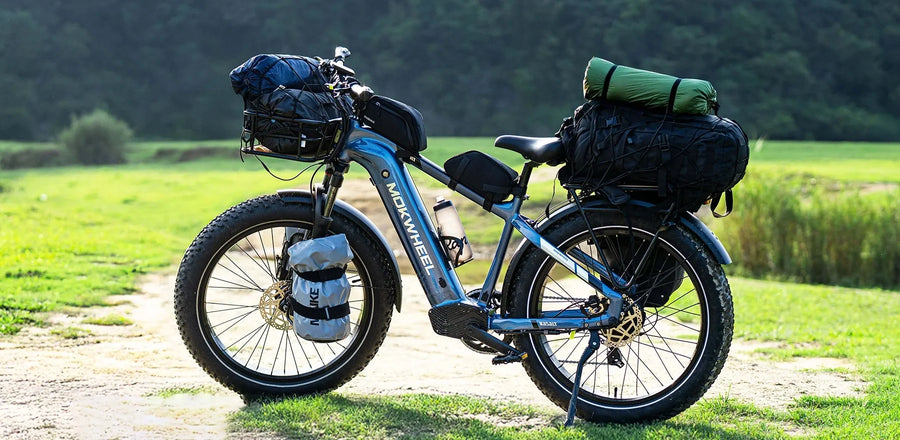
Electric Cargo Bikes Built for Everyday Utility
Some days it is a grocery run. Other days, it is a work bag, picnic gear, or the odds and ends that come with a busy week. The right electric cargo bike gives everything a dependable place to go without asking you to buy more bike than you need.
Start with your normal load—not the biggest number in the spec chart. Think about where the cargo will sit, how far you ride, how much room you have at home, and how the bike should feel once it is loaded. Mokwheel offers two practical ways to carry more: the compact, two-wheel Scoria 2.0 and the three-wheel Granite E-Trike.
Electric Cargo Bike or Electric Utility Bike: What Is the Difference?
An electric cargo bike is designed around carrying. That usually means a purpose-built rack, platform, box, or basket setup with documented load limits. An electric utility bike is a broader idea: an e-bike set up to handle useful everyday jobs such as errands, commuting, and carrying gear.
The two categories overlap, especially among compact models. A cargo e-bike can also be a utility bike, but a standard e-bike does not become a dedicated cargo bike just because a small rack can be added. The real difference is the complete setup—where the load sits, how it attaches, what each component is rated to carry, and how the bike handles with that weight onboard.
In practical terms, Scoria 2.0 works as an electric cargo utility bike: compact enough for everyday trips, with an included rear rack for groceries and gear. Granite takes the same utility idea into a three-wheel format with separate front and rear cargo areas.
Choose the Cargo Setup That Fits Your Day
Scoria 2.0: Everyday Cargo in a Compact Footprint
The Scoria 2.0 is a good fit for riders who want useful cargo space while keeping the familiar feel of a two-wheel e-bike. Its included rear rack gives groceries, bags, and everyday gear a clear place to ride, while the 20-by-4-inch tires and upright riding position suit relaxed trips around town and on paved paths.
The compact layout is easier to work into a garage or other tight storage area than a full-size longtail. Hydraulic disc brakes, a Shimano 8-speed drivetrain, and torque and cadence sensing round out a setup made for routes that can change from one day to the next.
Mokwheel lists Scoria 2.0 at 82 lbs with a 350 lb total payload. Think of that payload as one shared limit for the rider, cargo, and installed accessories—not the amount that can be placed on the rear rack. Mokwheel lists an estimated range of 60–80 miles. Your distance will vary with load, assist level, hills, speed, tire pressure, weather, and rider input.
Granite E-Trike: Three-Wheel Support and Organized Cargo Space
The Granite E-Trike takes a different approach. Its three-wheel layout provides support at a stop, while separate front and rear cargo areas make it easier to organize a load. The low step-over frame simplifies access, and a rear differential lets the two back wheels turn at different speeds through a corner.
Granite weighs 101 lbs and has a published total payload of 350 lbs, including the rider and cargo. Mokwheel rates the front basket for up to 55 lbs and the rear basket for up to 220 lbs. All three limits still apply together, so plan the complete load rather than treating each number separately.
Granite is wider and turns differently from a bicycle. Give yourself time to learn the ride, take corners at a comfortable pace, and measure gates, doors, parking spots, and storage space before ordering. Mokwheel lists an estimated range of 45–55 miles; real-world distance will depend on the route, load, assist use, surface, weather, and rider input.
Scoria 2.0 or Granite E-Trike: Quick Comparison
| Compare |
Scoria 2.0 |
Granite E-Trike |
| A good fit if you want |
A compact two-wheel utility setup for errands and everyday gear |
Three-wheel support at stops and separate cargo areas |
| Cargo setup |
Included rear rack |
Front and rear baskets |
| Published total payload |
350 lbs, including rider, cargo, and accessories |
350 lbs, including rider, cargo, and accessories |
| Bike weight |
82 lbs |
101 lbs |
| Ride feel |
Leans and turns like a bicycle |
Wider footprint with different low-speed turning behavior |
| Storage needs |
More compact |
More floor space and doorway clearance |
| Manufacturer-listed range |
60–80 miles |
45–55 miles |
Range figures are manufacturer estimates, not guaranteed loaded results. If ride feel is an important part of your decision, use the Mokwheel dealer locator to ask about local availability and test-ride options.
How to Choose the Best Cargo E-Bike for Your Routine
There is no single best electric cargo bike for every rider. The right choice is the one that carries your normal load, fits your body and route, and remains practical to store. Five checks will narrow the decision quickly.
-
1. Start with what you carry
Picture the real load: two grocery bags, tools for work, a backpack, or weekend gear. Then look at the size and shape of the rack or baskets—not only the weight rating. A bag that fits securely is more useful than spare capacity you cannot organize.
-
2. Add up the complete payload
Total payload is shared by the rider, cargo, and installed accessories. Racks, baskets, bags, seats, and trailers can also have their own limits. Stay within every limit that applies to the complete setup.
-
3. Check fit with cargo in mind
Good fit matters even more with cargo onboard. Make sure you can get on and off comfortably, reach the controls, and put a foot down with confidence. Frame access helps, but rider-height guidance and adjustment range still matter.
-
4. Match the bike to your route
Hills, frequent stops, loose surfaces, and heavier loads all change how a ride feels and how much battery it uses. Motor wattage is only part of the picture; torque, sensor response, gearing, brakes, tire setup, and bike weight work together.
Plan range around your usual round trip with room to spare. Manufacturer range figures are a helpful reference, but they are not a promise for every rider, route, or load.
-
5. Measure the way home
Check the full path to storage: doors, gates, hallways, elevators, turning space, and the final parking spot. If the bike will travel by car, confirm that the transport equipment supports its weight, dimensions, and wheel layout.
Load It Well, Then Enjoy the Ride
Keep heavier items low and centered when the approved cargo setup allows it. Secure anything that could shift, touch a wheel, or cover a light. Before heading out, check the tires, brakes, cargo straps or fasteners, wheel clearance, and battery charge.
For the first ride with a new setup, start light and take a short loop somewhere calm. It is the easiest way to learn how the bike starts, turns, and stops before adding more.
Need a little more room? Explore Mokwheel baskets and cargo racks, browse e-bike accessories, or review the Mokwheel cargo trailer. The trailer page currently lists Granite and Onyx Series as incompatible, so confirm your exact model and the current load instructions before ordering.