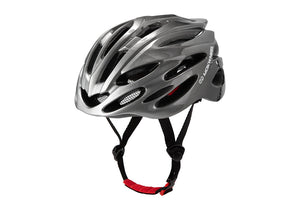








Helmet 1.0
Get it for just $9.90 with any e-bike purchase.
$9.99
$49.00


Shopping Cart
Add an eligible product to unlock your free gift.
0 of 2 eligible e-bikes added, Add more to unlock your free gift.
2 of 2 eligible e-bikes added · $499.99 value applied
[number] of 2 eligible e-bikes added, Add more to unlock your free gift.


Select communities receive an exclusive discount with ID.me



Onyx Ebike


Onyx ST Ebike


Obsidian 2.0 Ebike


Obsidian ST 2.0 Ebike


Basalt 2.0 Ebike


Basalt ST 2.0 Ebike

Scoria 2.0 Ebike

Onyx Ebike
Onyx ST Ebike
Obsidian 2.0 Ebike
Obsidian ST 2.0 Ebike
Basalt 2.0 Ebike
Basalt ST 2.0 Ebike
Scoria 2.0 Ebike

0% APR For 12 Months

Reliable Shipping

Quality Assurance

Secure Payment
Start with the ride you actually take. Hills, rough roads, cargo, and bike fit matter more than the largest wattage number. Use this table to find the motor and frame setup that fits your route.
| Series | Right For | Listed Motor Output | Torque | Control and Comfort |
|---|---|---|---|---|
| Onyx / Onyx ST | Steep hills and heavier loads | 750W rated, 1000W continuous, 1300W peak mid-drive | 210Nm+ | Torque + cadence sensors, full suspension, four-piston hydraulic brakes |
| Obsidian 2.0 / Obsidian ST 2.0 | Rough roads and full-suspension comfort | 750W rated, 1000W continuous, 1300W peak | 105Nm+ | Torque + cadence sensors, 130mm front and 50mm rear travel, hydraulic brakes |
| Basalt 2.0 / Basalt ST 2.0 | Pavement, gravel, and light trails | 750W continuous, 1100W peak | 90Nm+ | Torque + cadence sensors, 110mm front suspension, hydraulic brakes |
| Scoria 2.0 | Errands and everyday utility | 750W continuous, 1100W peak | 90Nm+ | Torque + cadence sensors, 100mm front suspension, hydraulic brakes |
Ask five questions before you buy:
A high-performance electric bicycle is not simply the one with the biggest number. It is the one that fits your route and gives you controlled help when the ride gets harder.
A motor with 1300W peak output does not run continuously at 1300W. Compare rated with rated, continuous with continuous, and peak with peak. Our e-bike motor power guide explains why two bikes carrying the same 750W label can feel different.
Torque is the turning force that helps you start, climb, and keep moving with additional weight. More torque does not automatically mean more speed.
A mid-drive works through the bike’s gears, giving it an advantage on sustained climbs. A hub motor drives the wheel directly and operates more independently from the drivetrain. Read our hub motor vs. mid-drive comparison to see which layout better fits your route.
Every model in this collection lists torque + cadence sensors, hydraulic disc brakes, four-inch fat tires, and a 48V 19.6Ah battery.
Choose the Onyx or Obsidian 2.0 series when front and rear suspension matter on rough ground. Choose the Basalt 2.0 or Scoria 2.0 when front suspension better matches your normal mix of pavement and unpaved surfaces.
Your range will change with assist level, hills, total load, wind, temperature, surface, and tire pressure. Peak motor power alone does not tell you how far the bike will go.
Choose the Onyx or Onyx ST if climbing defines your route. Their mid-drive motor works through a Shimano 10-speed drivetrain. Both include full suspension and four-piston hydraulic brakes.
The Onyx has a step-over frame. The Onyx ST offers the same core system with a lower step-through frame.
Choose the Obsidian 2.0 or Obsidian ST 2.0 if your rides regularly include bumps, gravel, ruts, or uneven roads. Front and rear suspension add cushioning where a front fork alone is not enough.
Choose the Basalt 2.0 or Basalt ST 2.0 if you want one bike for neighborhood roads, gravel paths, dirt roads, and light trails. The step-over and step-through versions share the same core motor, sensor, brake, and suspension specifications.
Choose the Scoria 2.0 if you want a low-step frame, compact 20-inch wheels, and an included rear rack.
Its smaller wheels create a more compact footprint. The complete bike still weighs 82 pounds, so it is not a lightweight or easily carried e-bike.
More motor power can help with acceleration, hills, and additional weight. It does not automatically raise the assisted-speed limit.
The Onyx, Obsidian 2.0, and Basalt 2.0 specifications list a 20 mph default and a 15–28 mph adjustable range in Custom Mode. Scoria 2.0 lists 20 mph using the throttle and 28 mph with pedal assist. A 28 mph maximum does not mean the bike provides 28 mph throttle operation.
If speed matters most, compare our fastest e-bikes. If you are shopping by exact motor output, visit our 750 watt electric bike collection.
Use the Mokwheel model comparison tool to review the numbers side by side. If a dealer is nearby, sit on the bike and take a test ride. Check the reach, mounting access, motor response, and braking feel. Those details tell you more about fit than a specification sheet alone.
Based on current listed motor specifications, the Onyx and Onyx ST are Mokwheel’s most powerful e-bikes. Both list 750W rated, 1000W continuous, and 1300W peak output with 210Nm+ of mid-drive torque. The Obsidian 2.0 series reaches the same 1300W peak but lists 105Nm+. Choose Onyx for a step-over frame or Onyx ST for lower step-through access.
No. Motor position does not increase the motor’s stated wattage. With motor output, battery, load, tires, surface, and gradient held equal, a mid-drive climbs sustained steep grades better because it can use the bike’s gears. A hub motor sends power directly to the wheel and operates independently of the bicycle’s gearing. Choose a mid-drive for demanding climbs and a hub motor for direct assistance on flatter or mixed routes.
Yes. With the hill, rider, cargo, tires, battery charge, and surface held equal, higher continuous output and usable torque provide stronger climbing assistance. For long climbs, compare continuous power first because the motor must sustain its output. For starting on an incline, compare torque. Treat peak wattage as a secondary figure because it describes short bursts rather than sustained climbing performance. Learn more in our e-bike torque guide.
No. When two e-bikes have the same assisted-speed setting, additional motor power does not raise that limit. It helps the bike accelerate more strongly and maintain assistance better on hills or under load. If speed is your priority, compare the listed pedal-assist and throttle limits instead of wattage. A 28 mph pedal-assist specification does not mean the throttle operates at 28 mph.
A powerful electric bike emphasizes motor output and torque. A high-performance electric bike combines that power with effective gearing, responsive sensors, controlled braking, suitable suspension, stable handling, and the right fit. Choose a powerful e-bike when hills or heavier loads are your main challenge. Choose by complete-bike performance when control and comfort across different terrain matter just as much as motor strength.